
Ayurveda instructs that colder time of year is a fundamentally a Kapha season, with a solid impact of Vata energy. In the Ayurvedic recuperating framework, as draws in like and alternate extremes balance, so during this crisp season, you'll need to welcome establishing and warming stances into your training to adjust Vata's cold and dry characteristics. In the mean time, stirring up your internal fire with turns and stimulating stances will assist with bringing Kapha's weighty and sodden characteristics into more noteworthy equilibrium.
While you could feel enticed to go into hibernation mode during winter, it tends to be advantageous to get your heart siphoning and make some intensity from the inside. Take a stab at hanging together this assortment of 10 yoga represents that will advance equilibrium, prosperity, and arrangement with nature.
What is number 8 yoga pose?
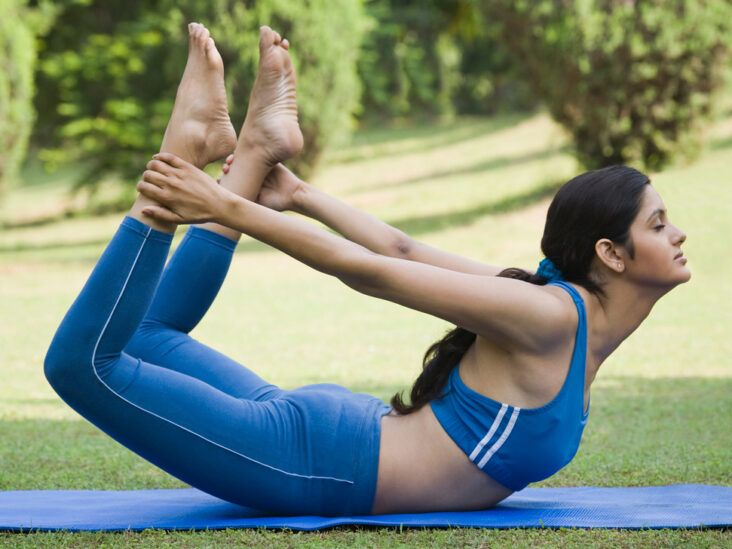
1. Descending Confronting Canine (Adho Mukha Svanasana)
From each of the fours, fold your toes under and lift your hips into a reversed "V" shape. Pedal your feet and swing your hips a couple of times to sink into the posture, and as you are prepared to find tranquility, lift your seat somewhat higher as you stretch down through your impact points. Center around tracking down a firm base of help through your hands and chunks of your feet. As you inhale profoundly, find an equilibrium point between the chest area and lower body, with the weight conveyed equitably between each of the four resources. Permit quietness to spread all through your sensory system as you hold the posture however long you like.
Descending Confronting Canine both strengthens and quiets the sensory system, making it an ideal stance for tracking down congruity. It makes a feeling of coordination and harmony between the right and left sides, as well as between the upper and lower body. In the colder time of year, center around firm and consistent holding to adjust the Vata energy, and envision drawing earth energy up through your hands and into your lungs to adjust Kapha.
2. Bow Jump (Ashta Chandrasana)
Step your right foot forward into a lurch, keeping your back areas of strength for leg straight. Come upstanding with your hands on your hips as you track down soundness and harmony between your legs. Go ahead and extend your feet from right to left to track down more noteworthy robustness in the posture. Lift your hips highlights your lower ribs, to make more prominent opportunity in your lower back. At the point when you are prepared, stretch your arms above, while drawing the tops of the upper arm bones once again into their individual shoulder attachments. Loosen up the shoulders, face, and eyes, as you look out into the great beyond line. Hold for a few breaths and afterward rehash on the subsequent side.
As a rule, standing postures construct endurance, intensity, and strength. Bow Thrust, specifically, trains you to confront existence with an open heart, straightforwardly and truly. As you work to confront your hips and heart straight ahead, you become clear about your course throughout everyday life, while residual grounded and secure right now. By zeroing in on your equilibrium and having an unmistakable relationship with the underpinning of your posture, you help to adjust Vata energy. To blend the Kapha components of winter, consider carefully clearing your arms all over as you inhale to set stagnation and stuck energy free from your heart space.
3. Rotated Petitioning heaven Thrust (Parivrtta Ashta Chandrasana)
Get back to Sickle Thrust with your right leg forward, and carry your right hand to your right hip. Keeping as much length as possible in your middle, start to wind upward to one side, permitting the chest area to shift forward when you can't go any further. Snare your left elbow outside your front thigh, and carry your hands to a request position. Press your hands unequivocally into each other, drawing the shoulders onto your back body, and pivot your middle toward the right thigh. Sense the twisting of energy moving around your spine and utilize your breath to spread that energy as far as possible unpredictable your body. Attract the navel toward your spine as you take a few breaths here. Rehash on the subsequent side.
Spun Petitioning God Rush gives a strong back rub to the inward organs, which can be gainful during Kapha season when processing can at times be slacking. The profound turning activity invigorates end, and neutralizes the languor of a Kapha unevenness. Turns are additionally normally warming stances, making them ideal in the cooler Vata months. As you carry intensity and imperativeness profoundly, welcome that energy to climb into your lungs, advancing a sound respiratory framework.
4. Triangle (Trikonasana)
Start in a wide standing stance. Turn the right foot out at a 90-degree point and guarantee the external edge of your left foot lines up with the short edge of your yoga mat. Press your feet equally into the earth, enacting your legs and attracting the muscles toward the bones. Lift your arms to bear level and stretch out through your fingertips. Connect through your right arm, extending as far forward as conceivable while stepping the right hip back and down; permit your pelvis to tip to one side. Carry your right hand to your right shin or to the beyond your shin for strength; surrendered arm arrives at directly to the sky.
Feel the consecrated three-sided shapes you are making with your legs and in the space between your base arm and front leg. Inhale into the entire body while feeling serious areas of strength for an of combination at your middle. Extract your legs together to come up and from the posture, and afterward rehash on the subsequent side.
Rehearsing Triangle present in winter assists with adjusting your whole framework genuinely and vigorously. Solid legs ground your Vata energy, while an open heart and extended focus breathe life into any weighty Kapha energy. Practically your muscles are all functioning here, yet the shape advances equilibrium, quiet, and a profound feeling of harmony.
5. Side Board (Vasisthasana)
From Descending Confronting Canine, unite your feet and twist your impact points to one side, stacking your feet. As you shift your weight into your right arm, make certain to keep the wrinkle of your right elbow looking ahead in order to keep up with appropriate shoulder arrangement. Carry your passed close by to your hip, or straight up to the sky, as you lift through the two hips. For an additional test, keep the enormous toe ball hills of your feet together, however bring your impact points somewhat separated from each other. Discharge the posture via cautiously getting back to Descending Confronting Canine, and afterward bringing down to your knees to rest between sides.
Side board firms and tones the whole body. It reinforces the shoulder support, wrists, arms, and chest, as well as the obliques, glutes, and legs. Since it is a difficult posture, it further develops focus, which is useful for keeping the psyche sharp during the hazier, colder months. On the off chance that you experience difficulty tracking down your funds owed to overabundance Vata energy, have a go at bringing your base knee down to the ground and holding for a more extended timeframe.
6. Wild Posture (Utkatasana)
Start remaining with your enormous toes together to contact. With solid legs, twist the knees as though you were sitting once again into an undetectable seat. Keep your sacrum protracting down toward the earth and the abs attracting to keep a nonpartisan bend in your low back. Hold the load back in the heels, rather than moving forward into your toes. Loosen up through your fingertips, with your arms either before you at shoulder level or up close by your ears. Discharge into Mountain present or into a forward collapsing stance to deliver your spine.
As its name proposes, this posture advances a feeling of solidarity, strengthening, and interior determination. It is likewise one of the most proficient stances for building heat in your body in only a couple of breaths. Utkatasana fortifies your significant muscles as a whole, yet in addition your significant joints in general and bones, making it very strong in a literal sense. As you ground down through your legs and tone your gut, you decline Vata energy while you fabricate your inward fire, areas of strength for advancing and determination that can some of the time be deficient in Kapha season.
7. Crow Posture (Bakasana)
From a forward twist, crouch with the feet together and the knees separated. Put your hands immovably on the ground, similarly as they were for Descending Confronting Canine, with a firm base of help underneath the webbing between your thumbs and index fingers. Lift your hips high, place your knees into your armpits; permit your shins to lay on your upper arms like a rack. Continue to crush your feet vigorously toward the midline as you shift your weight forward and take your feet off the ground. Looking forward will assist with keeping you from falling forward.
Note: You can continuously put a pad or support under your head in the event you do fall. Rock all through the represent a couple of times prior to holding however long you can.
Crow Posture develops fortitude and endurance and gets your heart siphoning. Shine on being at the same time grounded and light in your energy, and check whether it becomes simpler to take off. To treat Vata irregularity, continue to embrace the muscles to the bones and crushing in toward the midline. For Kapha awkwardness, keep your hips high and continue to look forward as opposed to down underneath your face.
8. Headstand (Sirsasana)
Start down on the ground, and lower to your lower arms with your elbows shoulder-width separated. Intertwine your fingers and support the rear of your head on the floor. Push down such a huge amount with the elbows and lower arms that the shoulders lift away from the ears and there is negligible load in the head and neck. Fold your toes under and walk your feet in toward your head. Emphatically draw in your center muscles and get your knees into your chest as you lift your feet off the floor. Gradually stretch out the two legs straight up to the sky, making a long queue of energy from the crown of the head to the tips of the toes. Hold for a couple of breaths or a few minutes, descending as carefully as you went up
FAQs
How do yogis stay warm in winter?
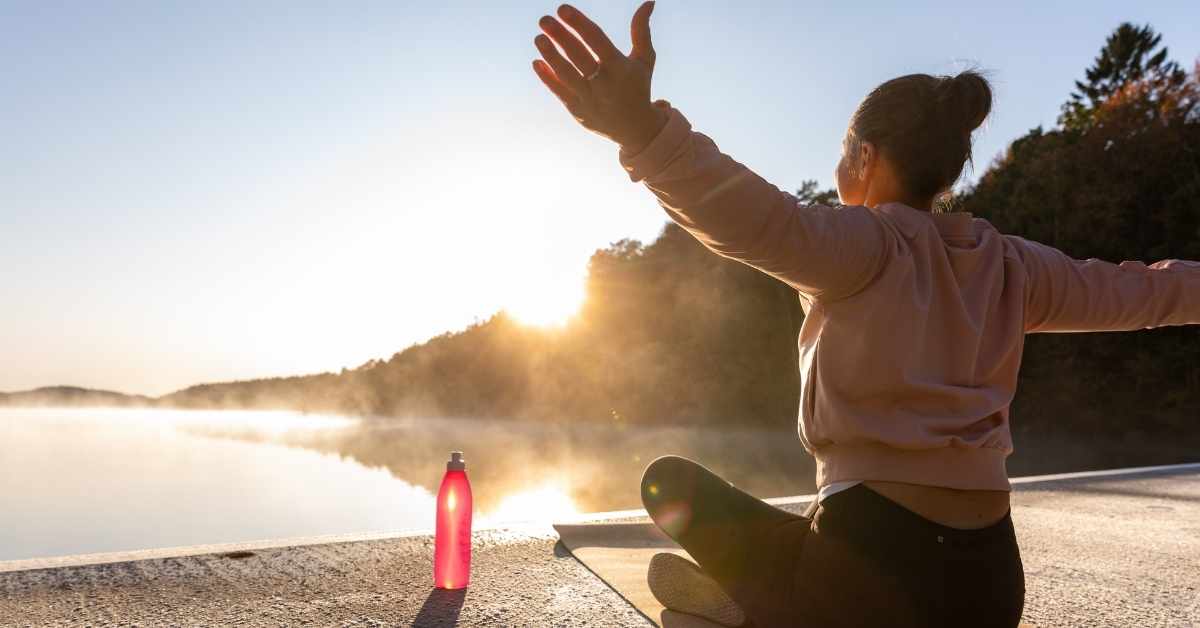
Headstand is the ideal posture which can keep you warm areas of strength for and the cold weather months. The asana reinforces your whole body and quiets your mind. You can take a stab at rehearsing it against a wall under the oversight of a yoga educator. The boat present is perfect for reinforcing your abs and hip flexors.
What is the winter solstice yoga?
In yoga, winter solstice rehearses as a rule incorporate Surya Namaskar A (Sun Greetings) and helpful or hip-opening yoga stances. These stances fall into arrangement with the Sagittarius-Capricorn shifts in the zodiac that are the sign of this time.
What are the 4 original yoga poses?
The Hatha Yoga Pradipika (fifteenth hundred years) indicates that of these 84, the initial four are significant, specifically the situated postures Siddhasana, Padmasana, Bhadrasana and Simhasana.